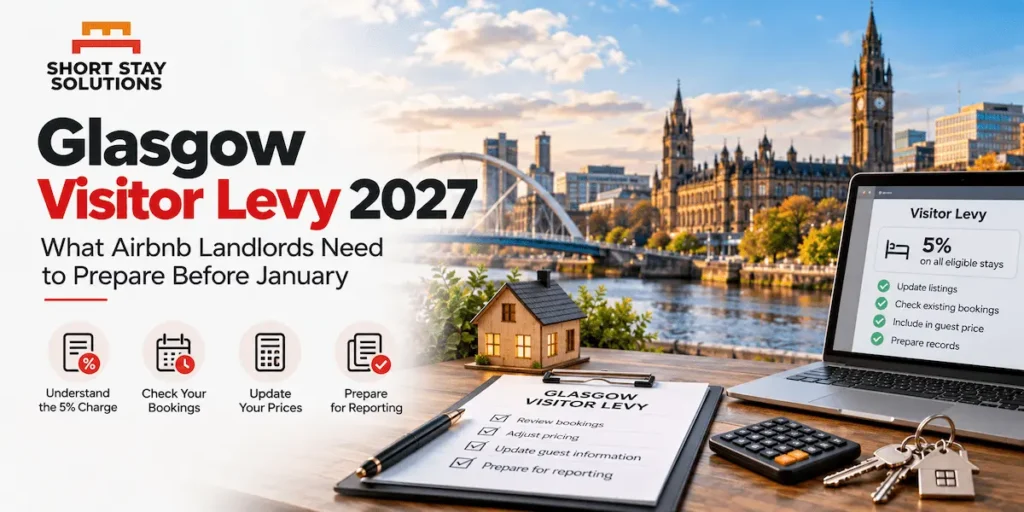
Glasgow’s visitor levy introduces another responsibility for landlords operating short-term accommodation. Preparing involves more than adding a charge to your listing: booking prices, guest messages and accounting records all need to work together.
Although eligible stays begin in January 2027, advance reservations already need attention. Reviewing your setup now gives you time to identify missing charges, test your systems and agree who handles reporting before guests arrive.
What Is Changing on 25 January 2027?
Glasgow’s visitor levy is scheduled to apply to eligible overnight accommodation from 25 January 2027. The scheme covers short-let accommodation alongside other paid visitor stays.
The 5% Rate and Full-Stay Charge
The rate is 5%, applying for the full duration of an eligible stay. Unlike Edinburgh, Glasgow does not have a five-night cap. This distinction matters when configuring booking software, particularly if you manage properties in both cities.
Which Properties Are Within Glasgow’s Levy Area?
The scheme applies within the Glasgow City Council boundary, including accommodation operated below the VAT threshold. Check the property’s actual local authority rather than relying on its postal address or how it is marketed.
Once you have confirmed the location, review the reservations that could fall within the scheme.
Which of Your Bookings Will Be Affected?
A reservation’s booking date and stay dates serve different purposes. Keeping both visible in your records makes it easier to identify bookings requiring review.
Understanding the 1 April 2026 Booking Cutoff
Current official guidance identifies 1 April 2026 as the advance-booking cutoff for eligible stays from 25 January 2027. Older material refers to January 2026, so use the updated guidance when checking reservations.
Reviewing Existing Reservations for 2027
Export your forward bookings and compare their dates, agreed prices and payment records. Flag reservations where the levy’s treatment is unclear.
Do not automatically request extra money from an existing guest. Review the original booking terms and platform requirements first, then establish how any applicable liability will be covered.
How Much Levy Should You Calculate?
With the affected bookings identified, the next step is establishing the correct calculation base. Use the accommodation charge rather than assuming the amount paid into your bank account is the relevant figure.
Accommodation Charges, Cleaning and Optional Extras
National guidance generally includes mandatory standard cleaning within accommodation costs. Separately optional services can receive different treatment. Keep the basis for any exclusions documented.
VAT and Booking-Platform Commission
VAT-registered providers must account for VAT on the levy. Platform commission should not automatically be deducted from the calculation base; the contractual transaction matters. Ask your accountant to check the setup.
A Worked Example for a Seven-Night Stay
Assume an eligible booking, a non-VAT-registered provider and levy-exclusive prices:
| Item | Amount |
|---|---|
| Seven nights at £100 | £700 |
| Mandatory cleaning | £60 |
| Levy base | £760 |
| Levy at 5% | £38 |
| Total if passed on to the guest | £798 |
This is an illustration, not a Glasgow market-rate estimate.
How Should You Update Your Booking Prices?
A correct calculation is useful only if your booking channels apply it consistently. Check what the guest sees, what you receive and what your records show.
Checking Airbnb and Booking.com Settings
Review the tax tools available for each listing and your property-management software. Test whether the charge reaches every eligible night and appears correctly in confirmations.
Treat collection and Council payment as separate checks. A platform displaying a levy does not prove that it remits the money on your behalf.
Showing the Full Price on Direct Bookings
Guests must know the levy-inclusive total at the point of purchase. Update your website and pricing information accordingly.
Run a test booking through the complete journey, including confirmation and payment. Check that the quoted total matches the amount recorded for accounting.
Avoiding Missing or Duplicate Charges
Where a channel manager controls several platforms, establish which system adds the levy. Test sample reservations to identify charges being added twice or omitted.
Resolve discrepancies before opening more availability under the new settings.
What Should You Tell Guests Before They Book?
Explain the charge briefly and connect it to the price they are seeing. Guests need clarity, not a lengthy account of the legislation.
Keep your listing, direct-booking page and confirmation wording consistent. Make clear whether the levy is already included, and provide an official information link for guests who want further details.
How Should You Handle Exemptions, Cancellations and Refunds?
National guidance recognises statutory exemptions, including qualifying disability benefits. Check Glasgow’s current procedures before deciding how an individual claim should be handled.
For cancelled stays, VisitScotland advises refunding the levy even where the remaining booking price is non-refundable. Keep the cancellation, refund and original charge connected in your records.
What Records and Reporting Arrangements Do You Need?
Organising records before launch will make the first reporting period easier to reconcile.
Setting Up a Booking and Levy Ledger
Use one record per reservation, showing the property, booking date, stay dates, channel, calculation and relevant adjustments. Include payment references so differences can be investigated quickly.
National guidance generally discusses five-year record retention; confirm Glasgow’s instructions when finalising your process.
Preparing for Quarterly Returns and Payments
Council scheme documents envisage quarterly reporting and anticipate the first return/payment in April 2027. Prepare for that cycle while checking the current timetable.
Reconcile bookings monthly so missing information can be resolved before a return becomes due.
Checking Official Deadlines and Portal Instructions
VisitScotland identifies visitorlevy.scot as the national returns and payment platform. Confirm Glasgow’s onboarding instructions and exact submission and payment dates; the sources reviewed for this guide did not establish specific first-period deadlines.
Who Handles the Levy When You Use a Property Manager?
Document who checks bookings, updates prices, maintains records and prepares payments. Owners using Airbnb management glasgow services should confirm these tasks are included in the agreed scope.
A third party can remit the levy only where a formal local-authority arrangement exists; the accommodation provider remains the liable person.
If your portfolio uses property management services scotland, keep each council’s rules separate within the shared workflow.
Your Before-January Preparation Checklist
Spread preparation across booking reviews, system tests and routine reconciliation rather than leaving everything until launch.
What to Review Now
Check council boundaries, forward reservations and how existing prices were agreed. Assign responsibility for resolving unclear bookings and monitoring official updates.
What to Test Before Launch
Test short and extended stays, cleaning charges, VAT settings and cancellations across your channels. Compare guest totals with your ledger and investigate any mismatch.
What to Reconcile After Stays Begin
Match completed reservations and adjustments to the amounts recorded. Keep return and payment confirmations together.
Making this part of your short term rental management routine will reduce last-minute reporting work.
Frequently Asked Questions
Does Glasgow Have Edinburgh’s Five-Night Cap?
No. Glasgow’s levy applies across the full eligible stay.
Does Being Below the VAT Threshold Make Me Exempt?
No. Glasgow’s scheme documents include providers below the VAT threshold.
Will Airbnb Automatically Pay the Council?
Do not assume it will. A Glasgow-specific automatic-remittance arrangement was not confirmed in the sources reviewed. Verify the current arrangement before relying on platform collection.
Does a Glasgow Postal Address Mean My Property Is Covered?
Check the local-authority boundary. A postal address or listing label alone does not establish whether the property falls within the scheme.
Is the Visitor Levy Separate From Short-Term Let Licensing?
Yes. Levy accounting does not replace applicable licensing, safety or planning responsibilities. Scotland’s short-term let licensing scheme remains a separate requirement.
Get your Durham short let ready for the festival weekend with Short Stay Solution request a free property assessment to discuss management support for your property. Call Us +447412514966